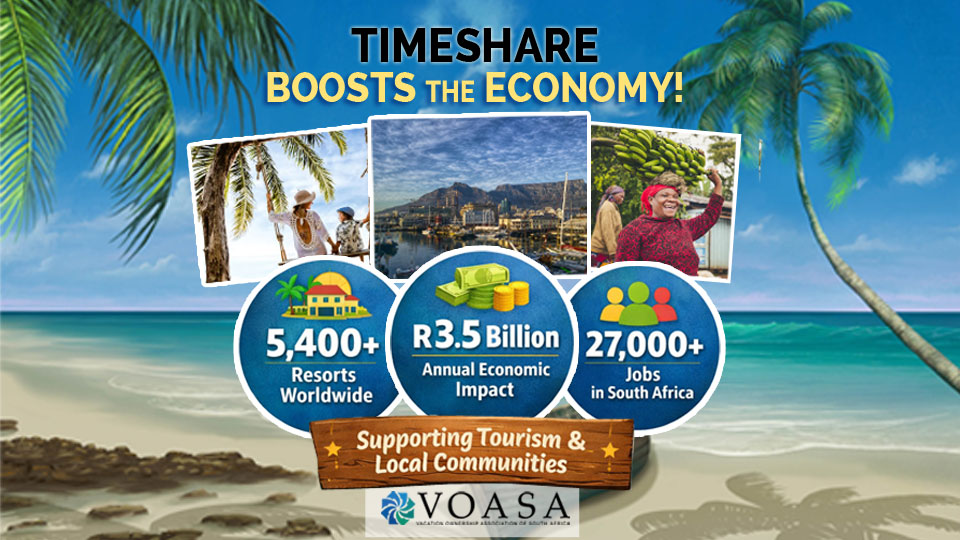
Timeshare ownership doesn’t only encourage people to take regular holidays and spend valuable time with family and friends — it also plays an important role in supporting the tourism economy.
Globally, the shared vacation ownership industry continues to make a significant economic contribution. According to an international industry study conducted by Oxford Economics, the sector spans the globe with more than 5 400 resorts, generating around 194 million room nights annually and approximately $19.7 billion in annual sales.
Travel to these resorts creates a ripple effect throughout the wider travel and tourism sector. In fact, timeshare-related travel supports nearly 1.3 million jobs worldwide and generates an estimated $146 billion in total economic output, demonstrating the broader value of the industry to destinations around the world.
South Africa remains one of the leading global markets for vacation ownership. The country consistently ranks among the top five worldwide for timeshare participation and purchase interest, reflecting the popularity of this style of holidaying among local travelers. Locally, the industry represents an estimated R3.5 billion per year, with a strong presence across the tourism and hospitality sectors.
The industry’s impact extends well beyond resort stays. Timeshare operations contribute billions of rand to the national GDP and support approximately 27 000 jobs, ranging from skilled professionals in hospitality management to a wide range of service and support roles that help keep resorts operating smoothly.
In several key tourism destinations, timeshare accommodation also represents a significant portion of available holiday lodging. Research by the Vacation Ownership Association of South Africa (VOASA) found that timeshare apartments account for around 63% of accommodation in Umhlanga, 60% in the Drakensberg, and approximately 70% in the Hazyview/Kruger Park region.
This presence highlights the important role the shared vacation ownership sector plays in sustaining local tourism economies. Holidaymakers staying at these resorts contribute to nearby restaurants, retail outlets, entertainment venues and local attractions, helping to support small businesses and community livelihoods.
Resort investment also drives local development. In recent years, more than R500 million has been invested in property upgrades and improvements across South African resorts. These developments not only enhance the holiday experience for owners and guests but also create opportunities for local entrepreneurs and suppliers. Many resorts partner with community artisans by showcasing handmade products in on-site curio shops, providing a platform for local craftspeople to sell their goods to visitors.
By balancing quality holiday experiences with meaningful economic participation for surrounding communities, the timeshare industry continues to contribute positively to South Africa’s tourism landscape.